Seventy Metres from Wat Phra Singh
Thailand · Chiang Mai
Rachamankha, Chiang Mai
Architect Ong-ard Satrabhandhu once stopped a gardener from cleaning the walls. The moss, he explained, was part of the design. He wanted Chiang Mai’s humidity to leave its mark on the building.
Rachamankha earned a Michelin recognition in both 2024 and 2025. Not for its restaurant alone — for the complete experience of being there. In a city of temples, it is itself something worth making the journey for.
or here directly at rachamankha.com
The Building
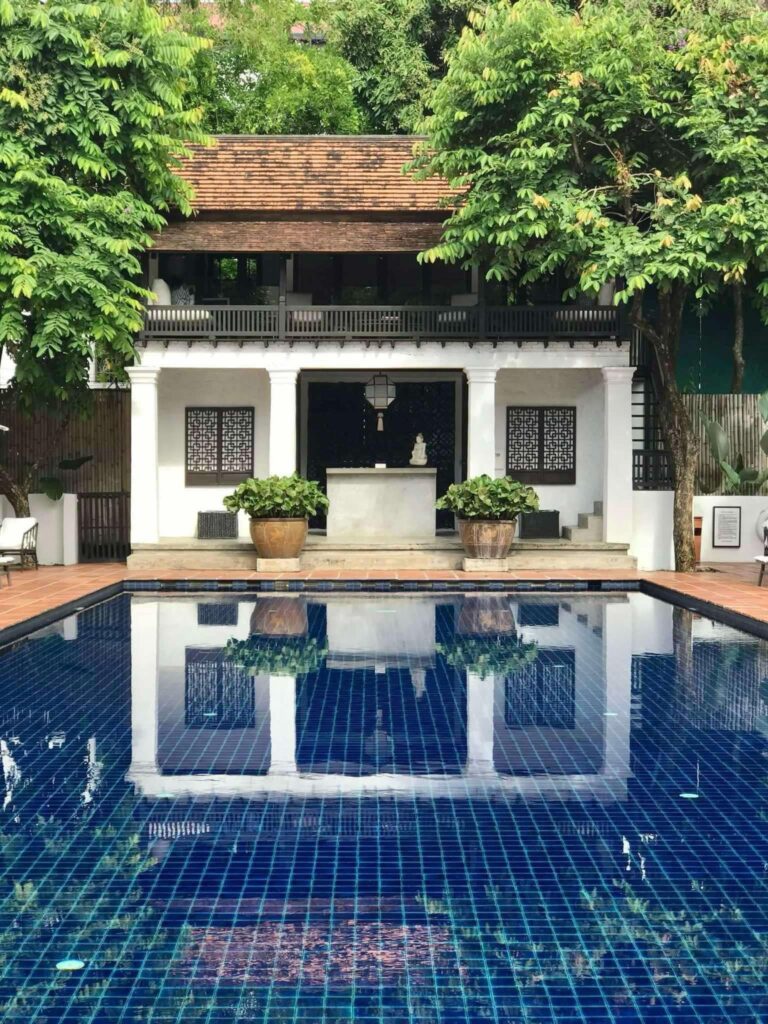
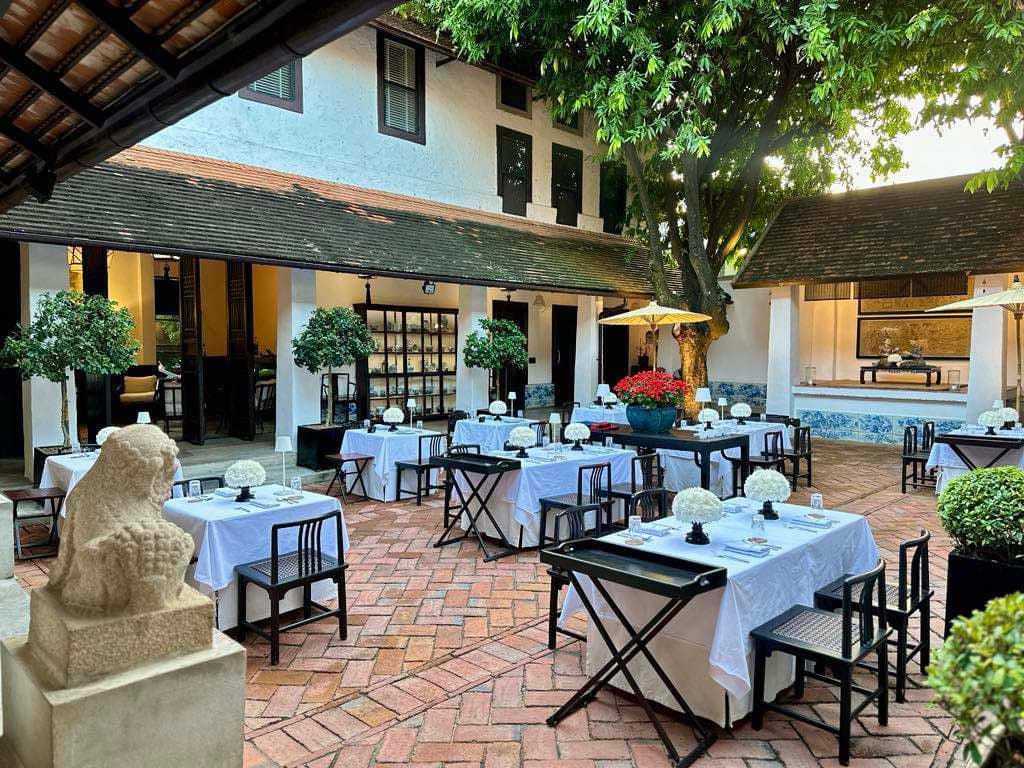
The hotel sits seventy metres from Wat Phra Singh — one of the most revered temples in northern Thailand — inside the ancient moat of the old city. Thai architect Ong-ard Satrabhandu spent years studying Lanna architecture before designing Rachamankha. The proportions of the main colonnade were derived from Wat Phra That Lampang Luang, a sixteenth-century temple in Lampang. The teak columns, the lime plaster walls, the hand-made terracotta tiles — all built new, on previously derelict land, using techniques and materials that could have come from 1296 when the city was founded. It has the quality, rare and almost impossible to manufacture, of a place that has always been here.
The Stay
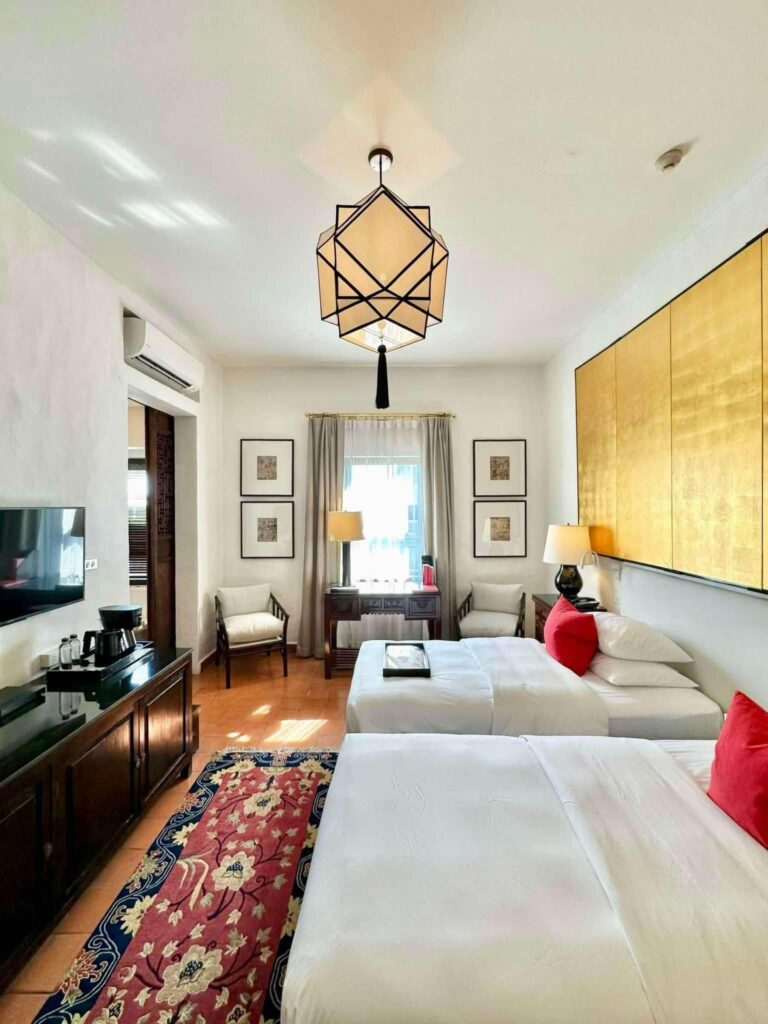
Twenty-five rooms arranged around two principal courtyards, connected by an open lounge for reading and quiet conversation. No two rooms are identical — the furniture is antique, assembled piece by piece over the years. A monk’s chest from Chiang Rai, a merchant’s cabinet from Yunnan. Ask for a room on the upper colonnade overlooking the main courtyard — the early morning light through the carved screens is the detail guests mention most. Children are not accepted under twelve, which explains the quality of quiet.
The restaurant serves among the best Thai food in Chiang Mai — The breakfast khao tom (rice soup) is worth waking early for. The evening tasting menu, served in the courtyard, could be one of the finest meals most guests have in northern Thailand.
The Particulars
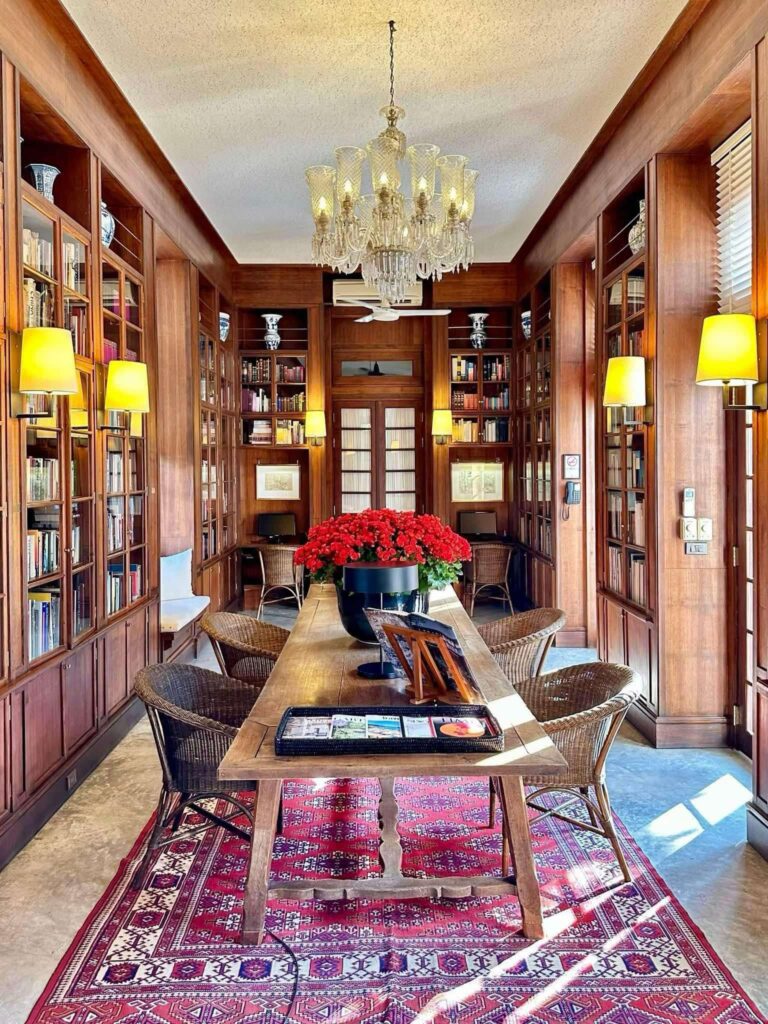
The library — over a thousand rare volumes on Asian art, architecture, and the Silk Road, many out of print. The kind of room that earns its own visit.
The gallery above the restaurant — a private collection of Lanna silverware, lacquerware, hilltribe jewellery, coins and artefacts discovered during construction, and an eighteenth-century Buddha image. Not decorative objects but evidence of what this ground once held.
The pool — quiet, proportioned, set in its own precinct beyond the second courtyard.
Complimentary bicycles — for exploring the old city temple district. The correct way to move between Wat Phra Singh, Wat Chedi Luang and the lanes of the moat area.
Location
Inside the ancient moat of Chiang Mai’s old city, seventy metres from Wat Phra Singh. The Sunday Walking Street — one of the great markets of Southeast Asia — is 328 feet from the front door. Wat Chedi Luang is a ten-minute walk. 20 minutes from Chiang Mai International Airport.
Who it’s for
For people who will spend mornings in temples and evenings in the courtyard and consider that a full day. Not for anyone who needs a beach, a rooftop bar, or a programme.
Photography courtesy of Rachamankha