Mae Nam – Mother Water
THAILAND · BANGKOK
Mandarin Oriental Bangkok, Bang Rak, Bangkok
Before it was called the Chao Phraya — the River of Kings — it was simply called mae nam. Mother water. The river that Bangkok was founded beside in 1782, that carried rice and teak downstream to the sea, that brought the world upstream whether the world had been invited or not.
Bang Rak, the neighbourhood where the hotel stands, was already a place of many peoples before the Europeans arrived — Thais, Chinese, Vietnamese, Malays, Lao, descendants of Portuguese who had been here since the sixteenth century. In the middle of the nineteenth century, King Rama IV signed the Bowring Treaty and opened Siam to European trade. He did it to keep Thailand free — the only country in Southeast Asia that would never be colonised. The Europeans settled in Bang Rak, built their embassies and trading houses, requested a road. Charoen Krung, Bangkok’s first paved road, was the answer.
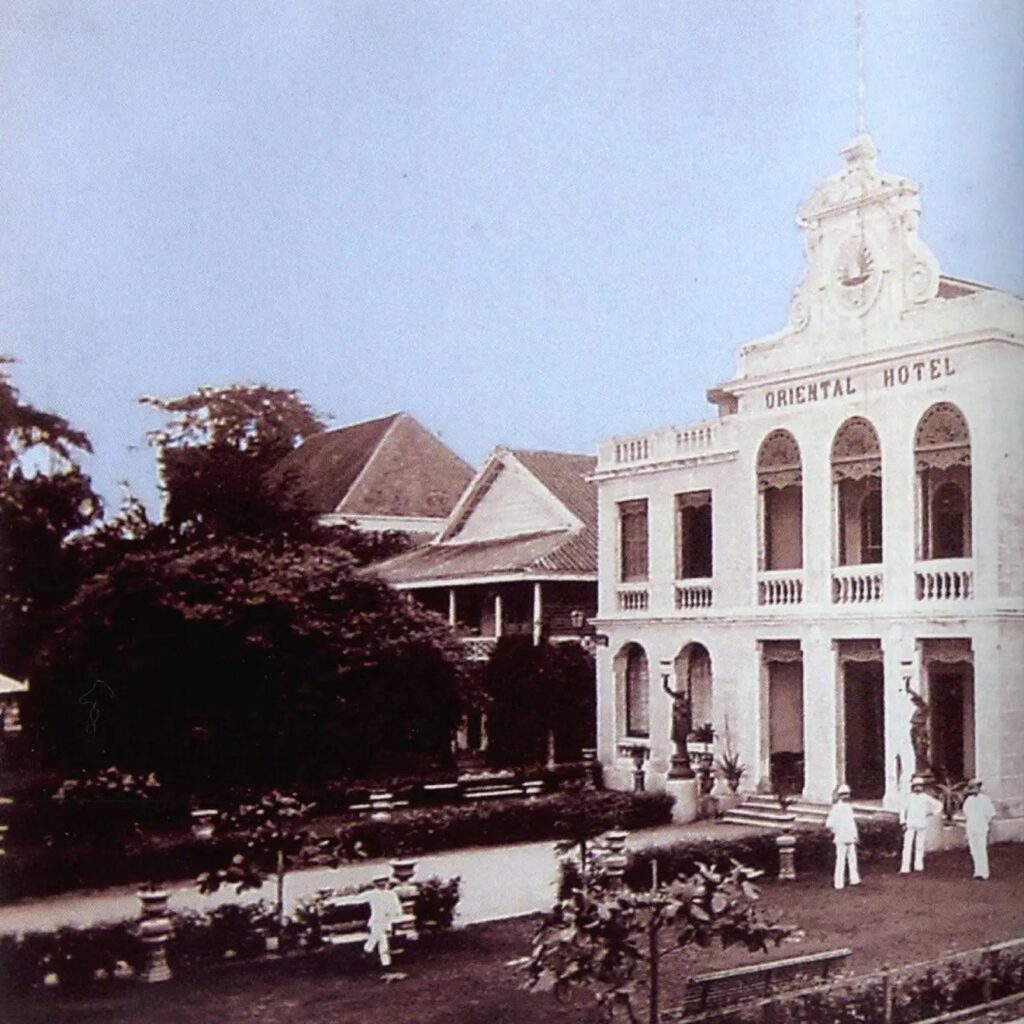
Two Danish sea captains built a modest boarding house on this riverfront plot in the 1870s. In 1876, a 29-year-old fellow Dane named Hans Niels Andersen checked in. He had made his money shipping teak to Europe and coal back to Asia. He had seen what hotels could be in other Asian ports. He bought the property, hired an Italian architect, and transformed a boarding house into the kingdom’s first modern hotel. King Chulalongkorn inspected it personally and chose it as the address where he would house his international royal guests. The Oriental was born.
or directly at MandarinOriental.com
The Building
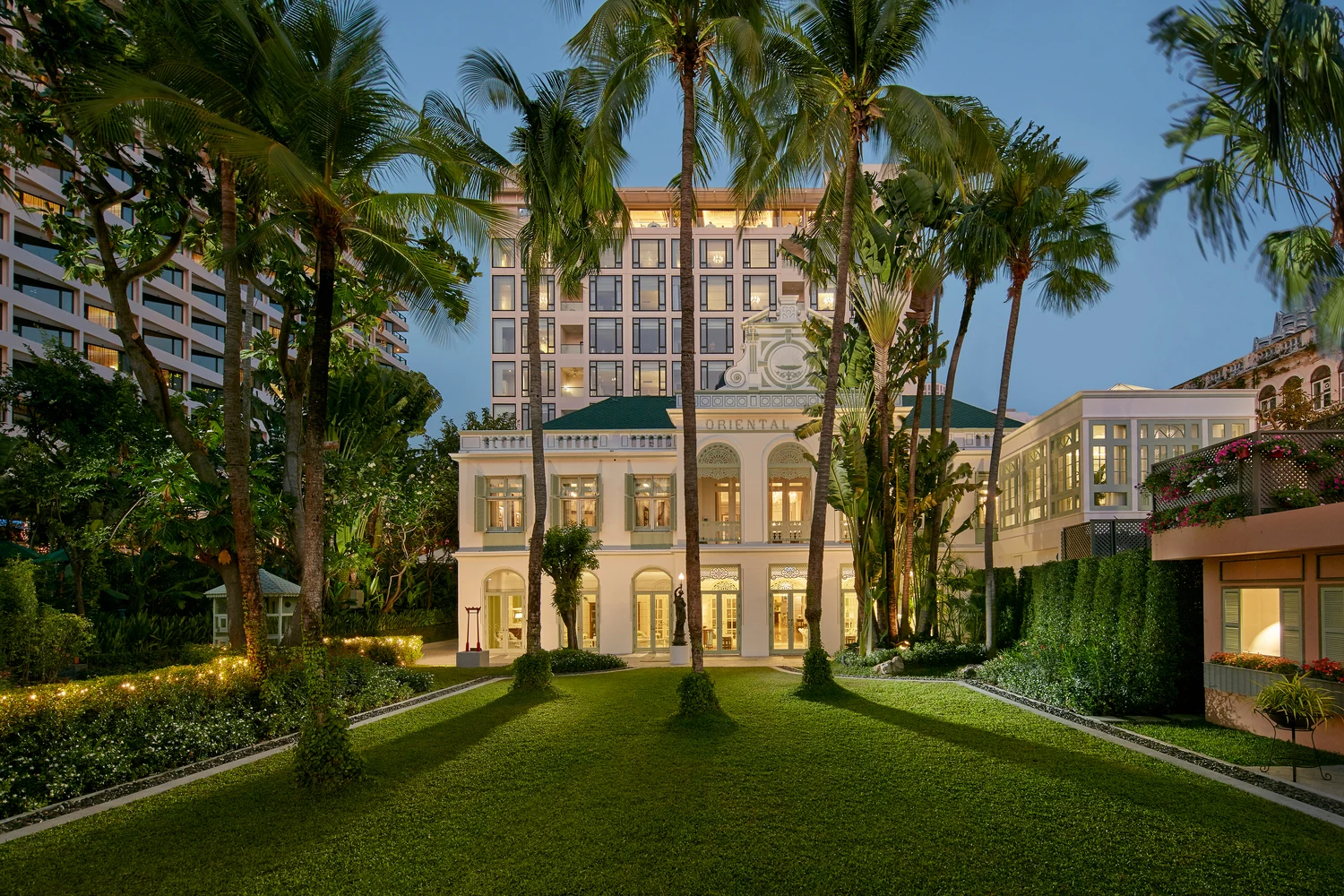
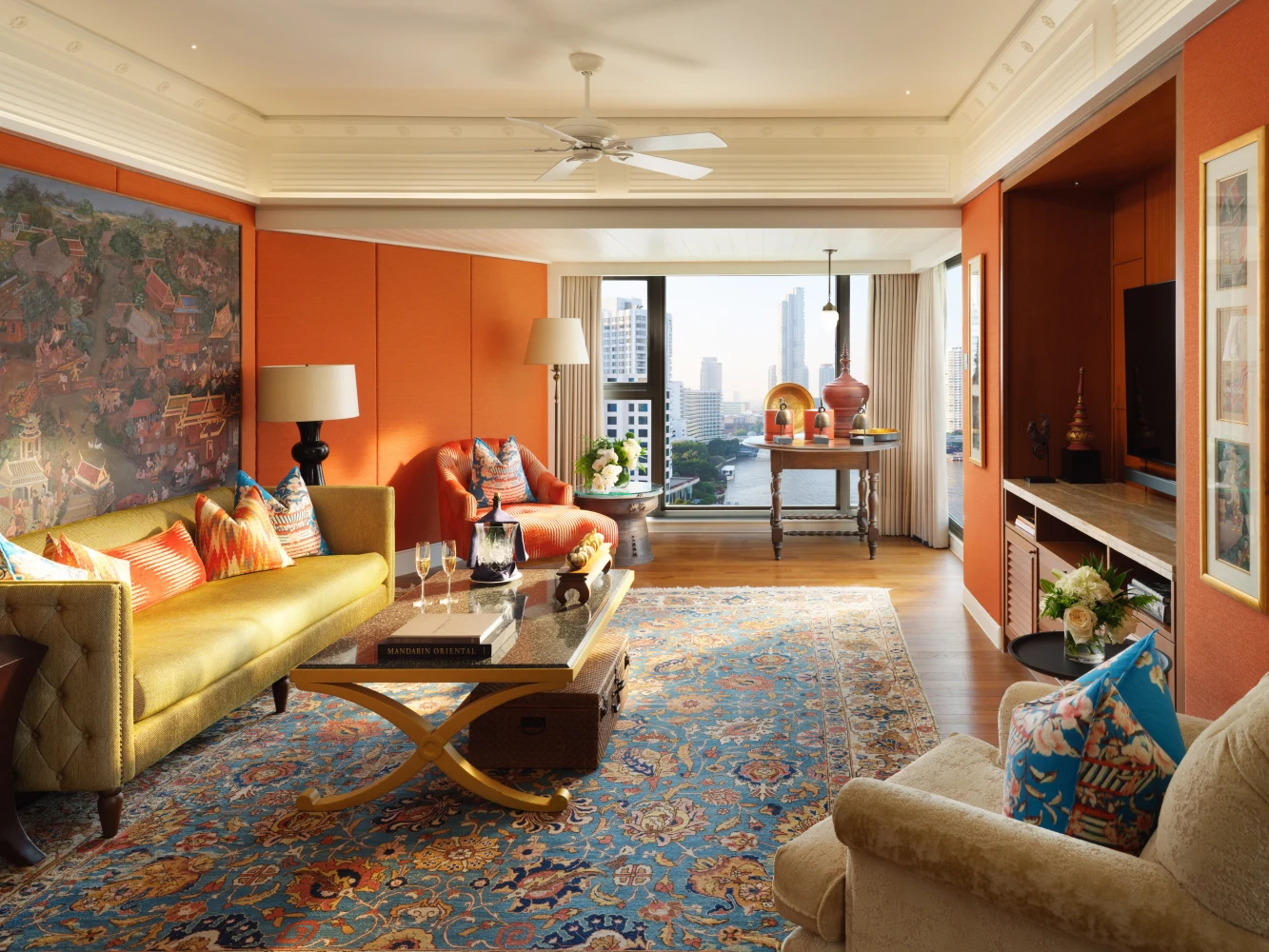
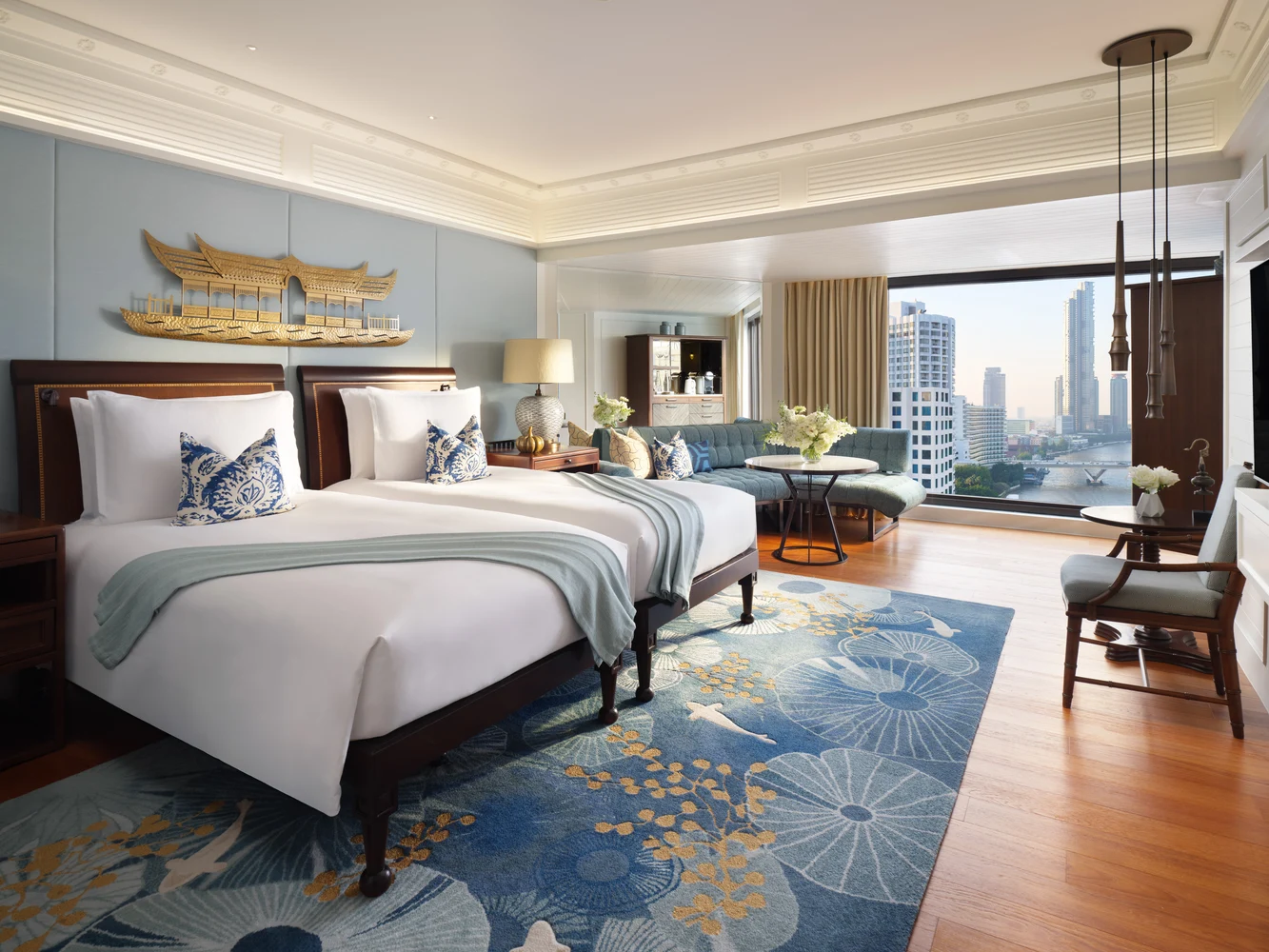
The Authors’ Wing — white with green trim, built in 1885 — is the oldest structure still standing, and the reason to come. The Garden Wing followed in 1958. The River Wing, renovated in 2019, faces the water entirely. Now, ahead of the hotel’s 150th anniversary in 2026, the Authors’ and Garden Wings are being transformed again — interiors by Jeffrey Wilkes, taking inspiration from the surrounding tropical gardens, introducing Thai craftsmanship and colour into rooms that have held the world’s most celebrated guests for nearly a century and a half.
On the opposite bank — reached by the hotel’s teak rice barge — a century-old golden teakwood house holds the Oriental Spa, Bangkok’s first city spa. The public river pier beside the hotel is still called Oriental Pier — N1 on the Chao Phraya express boat service, named for the original hotel long before the Mandarin Oriental era. The river still uses the old name.
The Stay
The teak barge collects guests from Saphan Taksin pier — a five-minute crossing. The rooms in the Authors’ Wing are furnished in white wicker and hand-painted fabrics, verandahs facing the water, each named after a writer who slept there.
Jim Thompson, the American silk merchant who fell in love with Thai textiles and culture, bought a share in the hotel after the war, quarrelled with his partners, sold his shares — and then continued living there anyway, obstinately, for over a year. In 1967 he walked into the Malaysian jungle and was never seen again. His silk fabrics remain woven into the design.
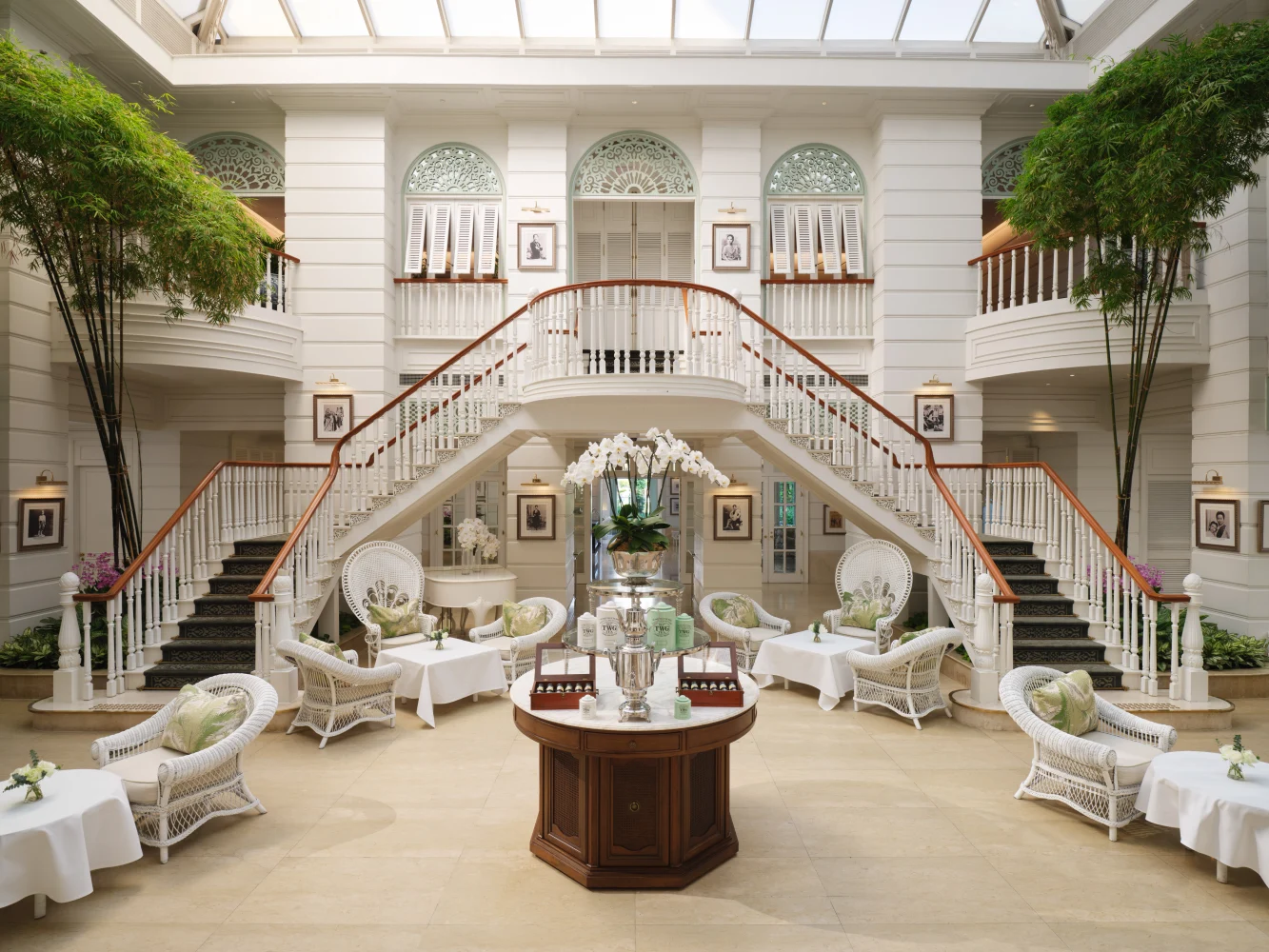
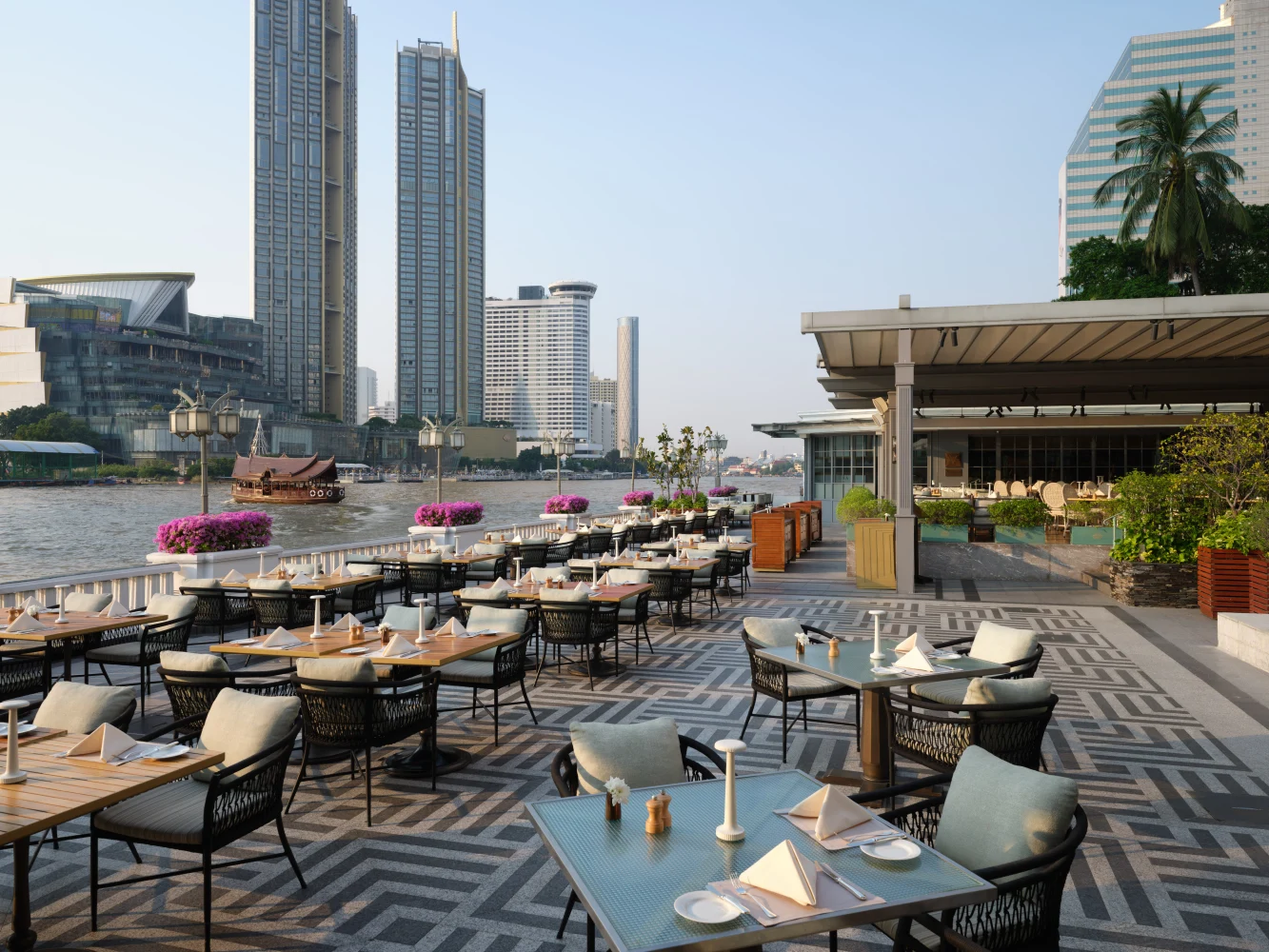
Breakfast is served beside the river — generous, Thai specialities alongside everything else. The Authors’ Lounge serves afternoon tea beneath 150 literary portraits — Maugham, Conrad, Greene, Coward, le Carré. In 1923, Maugham arrived and contracted malaria. Stranded for weeks with nothing to do but look at the water from his verandah and feel weak, he invented a fairy story. He returned twice more.
In 2024 it was named the World’s Best Hotel. The Bamboo Bar, opened in the 1950s to compete with Bangkok’s early jazz clubs, still has a quartet in the evenings.
The particulars
Breakfast by the river — the most celebrated in Bangkok. Arrive early and stay.
The Authors’ Lounge — afternoon tea beneath a century of literary history. Open to non-guests. Book ahead, particularly at the hour the light changes on the water.
The teak rice barge — complimentary from Saphan Taksin pier and to the spa, cooking school, and Thonburi bank.
The Oriental Cooking School — half-day classes in a teakwood house on the opposite bank, beginning with a market visit.
The Somerset Maugham Suite — where he recovered from malaria and invented a fairy story.
The Authors’ Wing rooms — older, with more soul. Request one facing the water.
Le Normandie — Anne-Sophie Pic, the most awarded female chef in the world, makes her Thai debut. One of the most significant restaurant openings in Asia in 2025.
The China House — Chef Fei’s contemporary Chaozhou-inspired Cantonese cuisine. The Teochew community were among the first Chinese merchants to settle in Bang Rak. The river brought them here too.
The Bamboo Bar — after dark, with a jazz quartet and the river outside.
Who it’s for
The writers who romanticised this river arrived with the privilege of those who could afford to be elsewhere and chose to be here. The traders who came before them arrived with commercial ambition. It is worth holding that, lightly, while sitting on the verandah at the hour the light goes gold — and finding that the beauty remains anyway.
For guests who want to sit above the Chao Phraya and feel, at once, the weight and the wonder of what this river has carried. For those who find that a hotel which has been reinventing itself since a young teak trader checked into a boarding house in 1876 is, in 2026, more alive than ever. For anyone who has read Maugham or Conrad in the context of Asia and wants to watch the same river pass.
Photography courtesy of Mandarin Oriental Bangkok
or directly at MandarinOriental.com