Layered Mountains, Rivers Intertwined
VIETNAM · NINH BINH
Nham Village Resort, Tam Coc, Ninh Binh, Northern Vietnam
Dinh Bo Linh was a buffalo herder. In 968 he defeated twelve rival warlords, ended a thousand years of Chinese domination, and proclaimed himself Emperor of Dai Co Viet — the precursor to modern Vietnam. He chose this limestone valley for his capital because, as he described it, the mountains and rivers were “layered and intertwined.” Nature itself was the fortress. His reign lasted twelve years before he was assassinated, leaving a six-year-old son on the throne. The court moved north to Hanoi in 1010. The valley returned to what it had always been — farmed, tended, lived in. Dinh Bo Linh is buried on Ma Yen Mountain.
Ninh Binh is two hours south of Hanoi. Limestone karsts rise from flat rice fields, the same karsts that made this valley unconquerable a thousand years ago. The Hoang Long River threads between them. The temples of Emperor Dinh and Emperor Le still stand in the fields — active, unhurried, visited mostly by Vietnamese rather than international travellers.
or directly at Nhamvillageresort.com
The Building
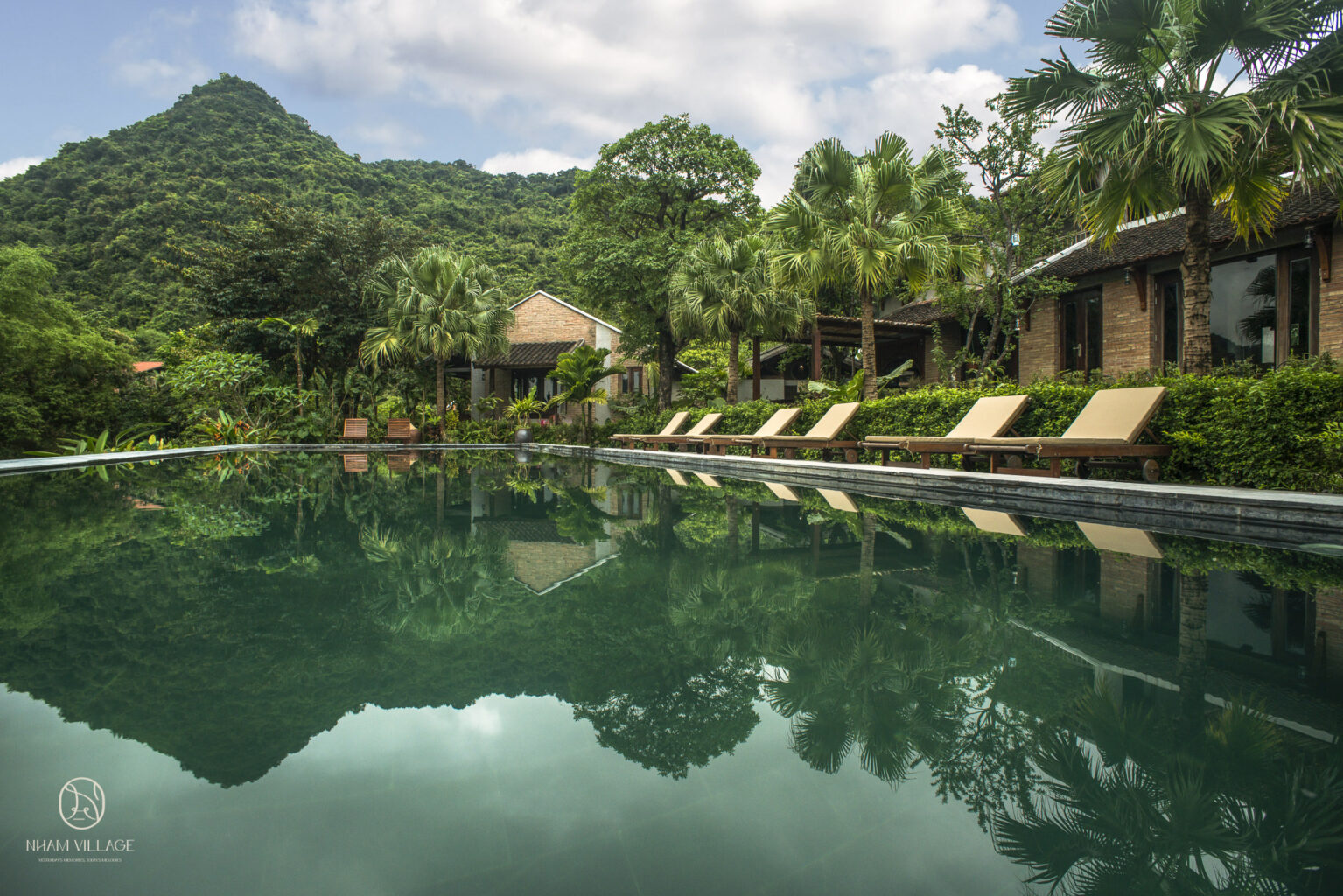
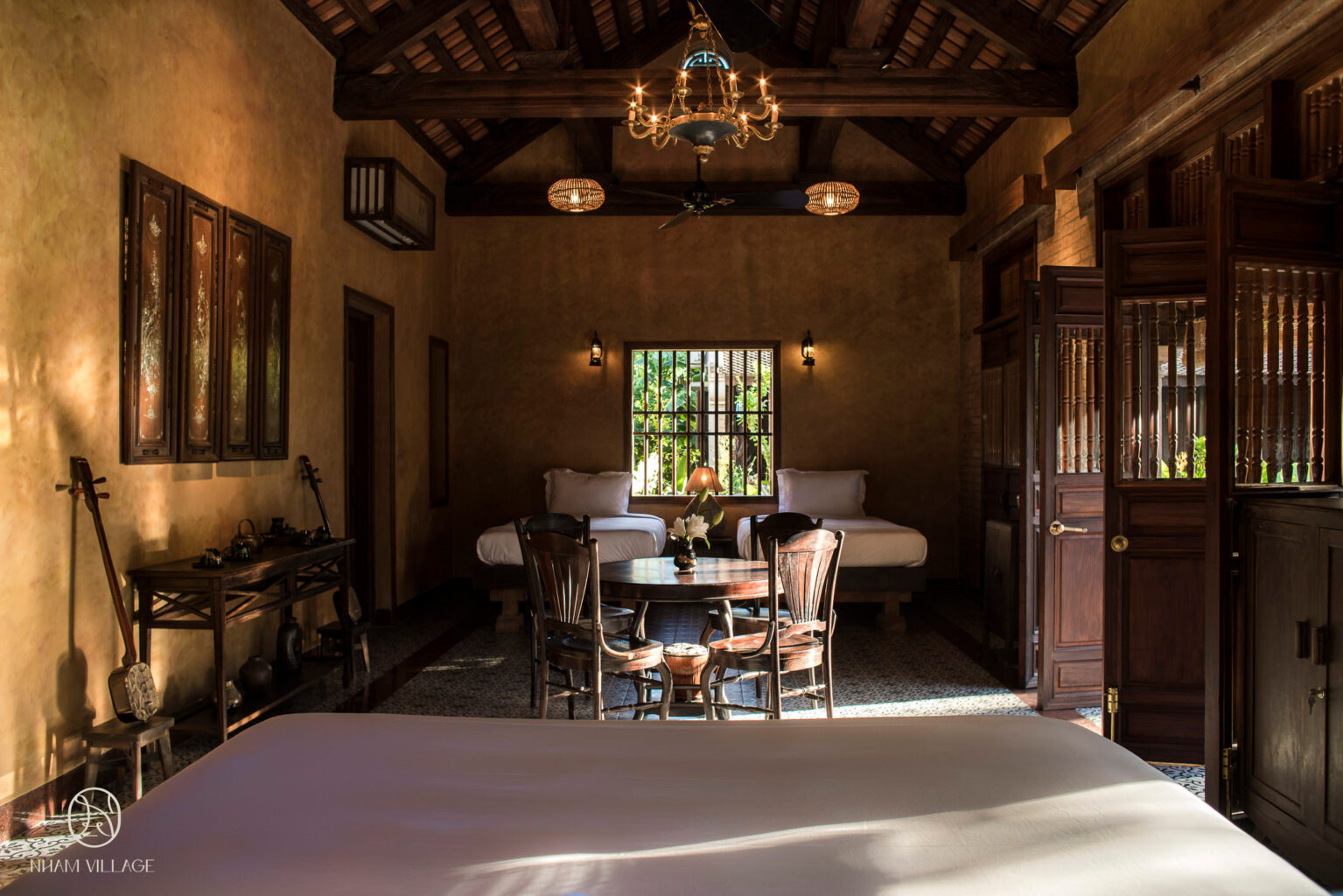
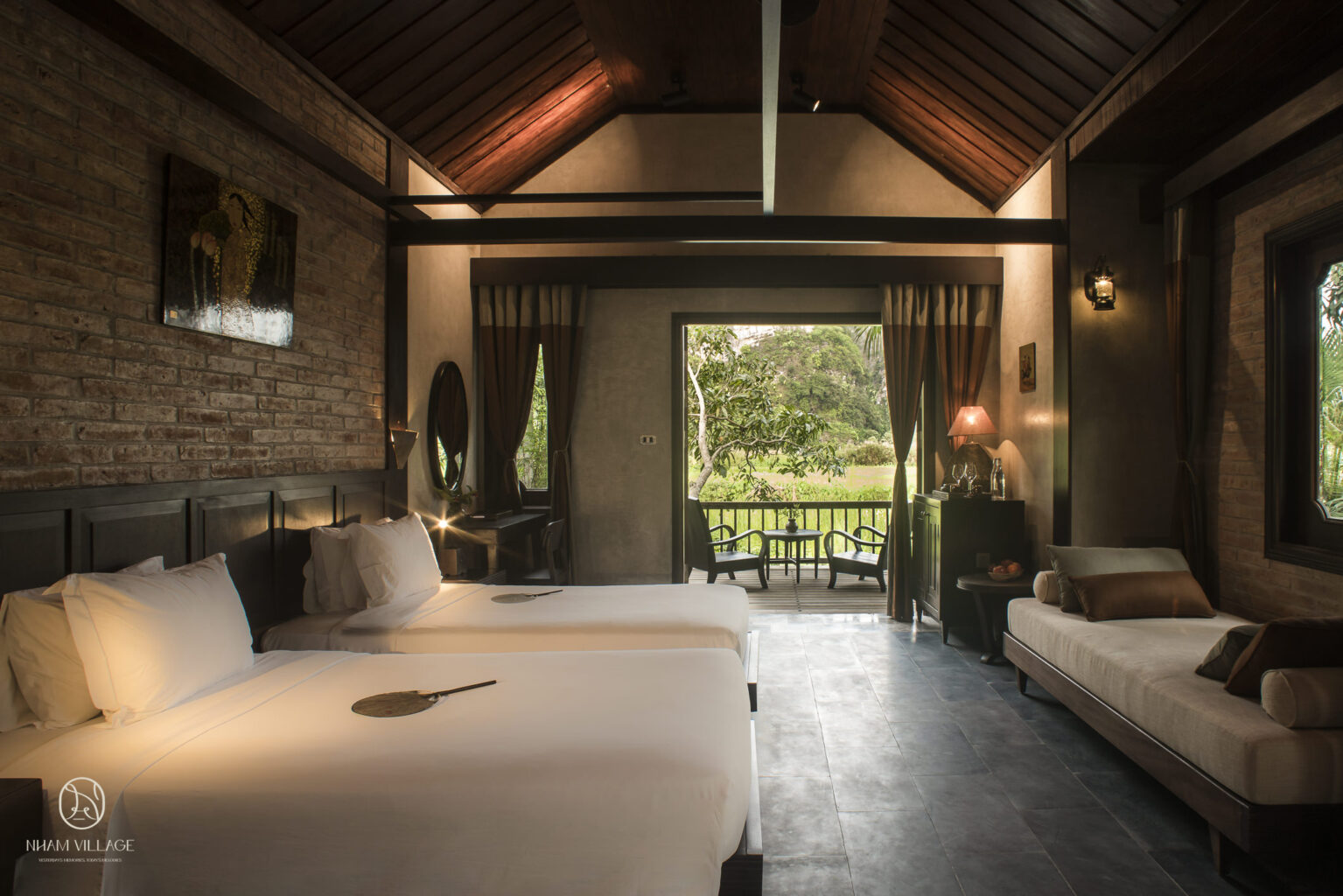
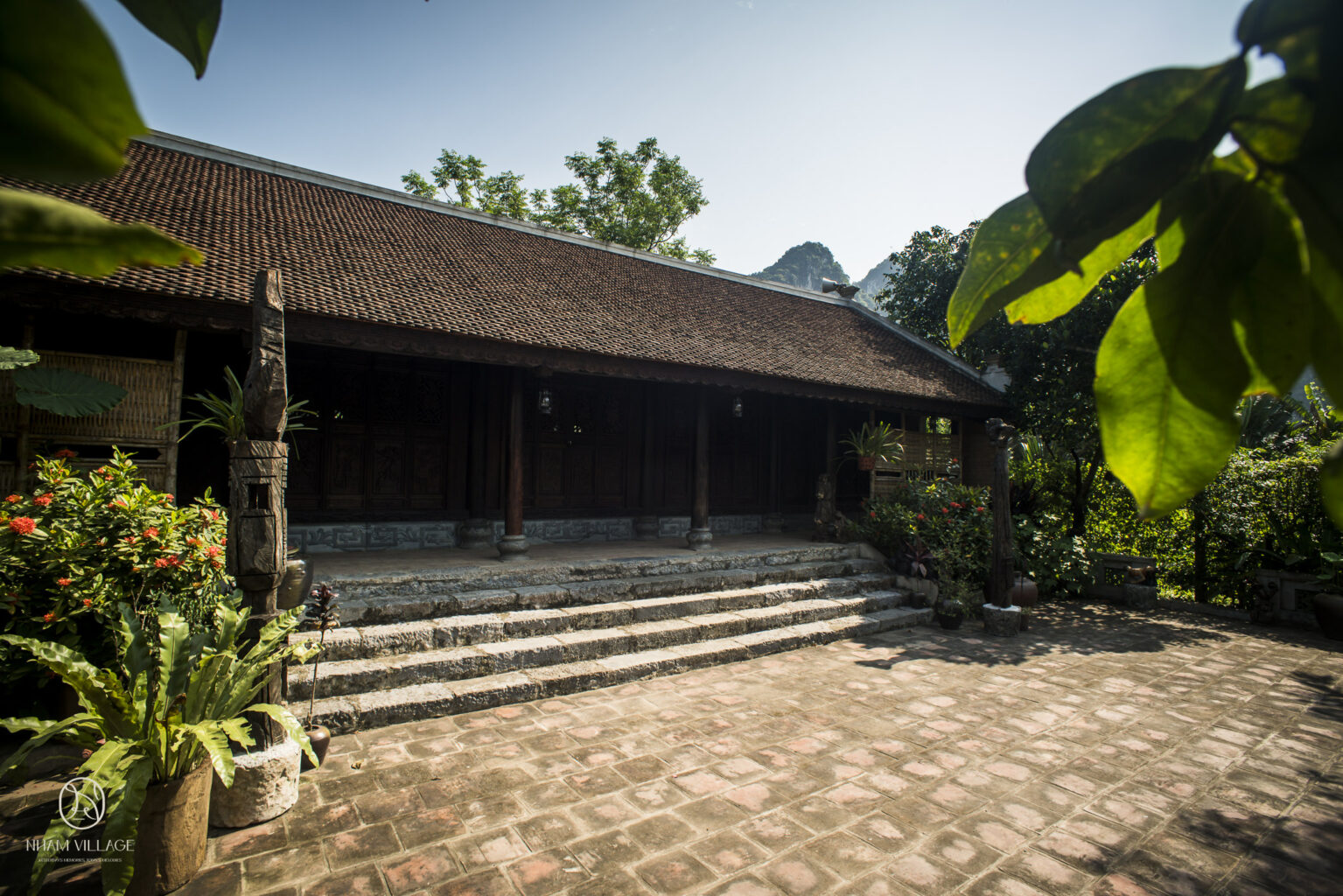
Seventeen rooms and villas in stone, wood and clay, tiled roofs visible from the road. The clay walls were handmade by local artisans. The heating runs on rice husks. The terrain was not altered during construction and native vegetation was preserved throughout. Nham Village features a total of 13 rooms, comprising 12 individual bungalows and 1 traditional house. Each room is named after a stage of rice production — Lua, the plant. Rom, the straw. Thoc, the grain.
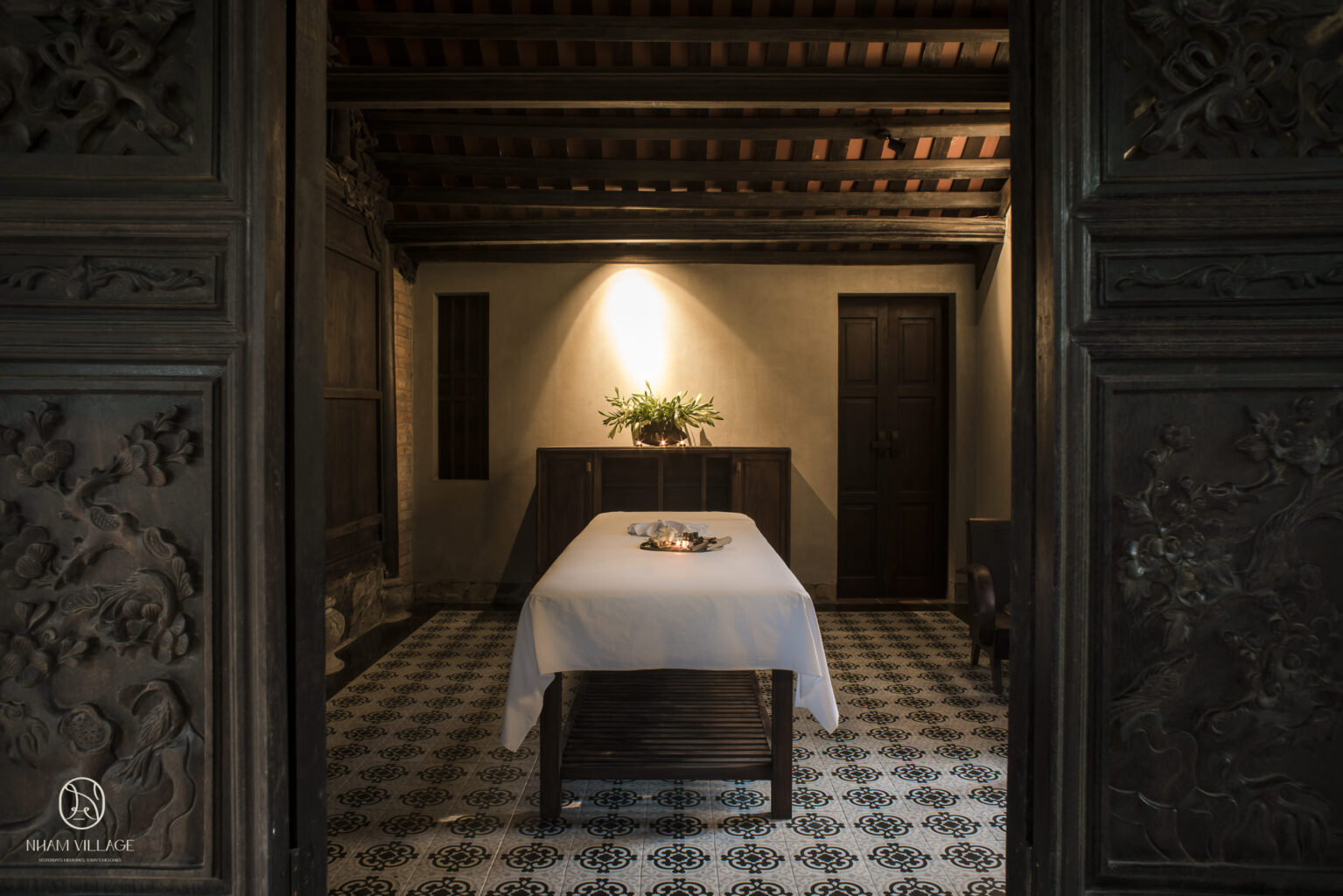
The saltwater pool faces the karst peaks directly. The Mộc spa is located within a 200-year-old traditional house, offering a wellness experience deeply connected to heritage and architecture. The restaurant is vegetarian-forward, seasonal, entirely local — guests who arrived expecting little have extended their stays.
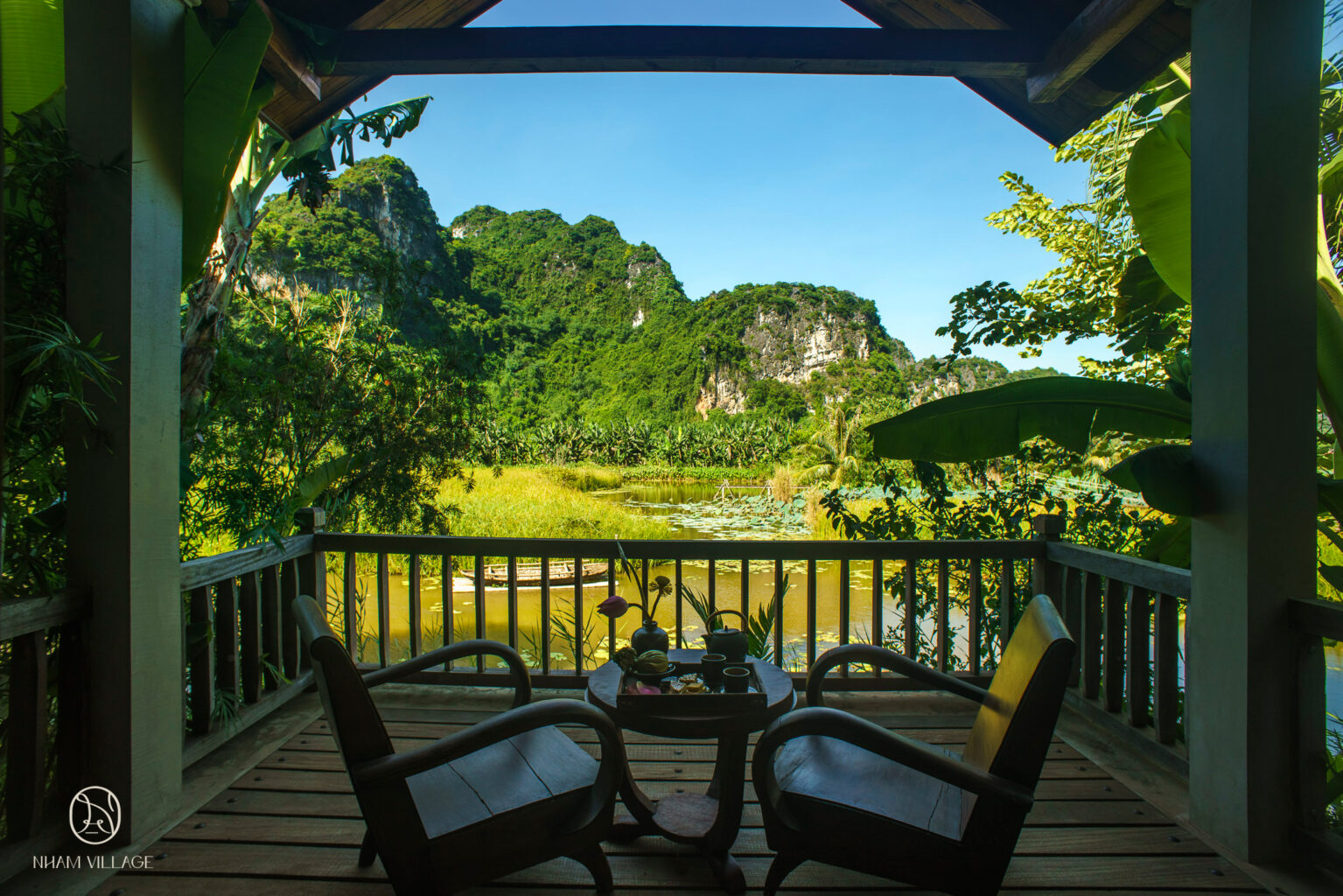
The lotus pond faces the karst. The terrace catches the morning light before the valley wakes. There is no excess, and that is precisely the point.
The Stay
The rice fields around Nham Village are still worked by the families who have farmed them for generations. The cycling routes, the boat trips, the morning market visits — all pass through the local community.
The Tam Coc boat trip — three limestone caverns, rowed by local farmers, rice fields on both sides, the karst peaks overhead — moves at the speed the valley has always moved. Go at dawn before the mist clears and the other boats arrive. Five minutes from the property. One of the most quietly extraordinary experiences in Vietnam.
The Particulars
Hoa Lu Ancient Capital — ten minutes away. The temples of Emperor Dinh and Emperor Le. Vietnam’s most historically significant site that most international travellers miss. Go in the early morning.
Tam Coc boat trip — three limestone caverns rowed by local farmers. Go at dawn before the mist clears and the other boats arrive.
Free bicycles — the right way to experience the surrounding villages and rice fields. The road along the river at sunrise stays with you.
Vietnamese cooking class — bookable through the resort. A half day in a kitchen that takes its ingredients seriously.
Basket-making workshop — a genuine craft experience with local artisans, not a performance of one.
Best season — September to November for harvest gold. February to April for wildflowers along the riverbanks.
Who it’s for
For those who want northern Vietnam before it changes. For travellers who have stayed in enough hotels to know what they are choosing not to have — and find that the saltwater pool facing the karst, the rice husk heating, the bicycle by the door is precisely enough. Not luxury. Something rarer. Very patina.
Photography courtesy of Nham Village